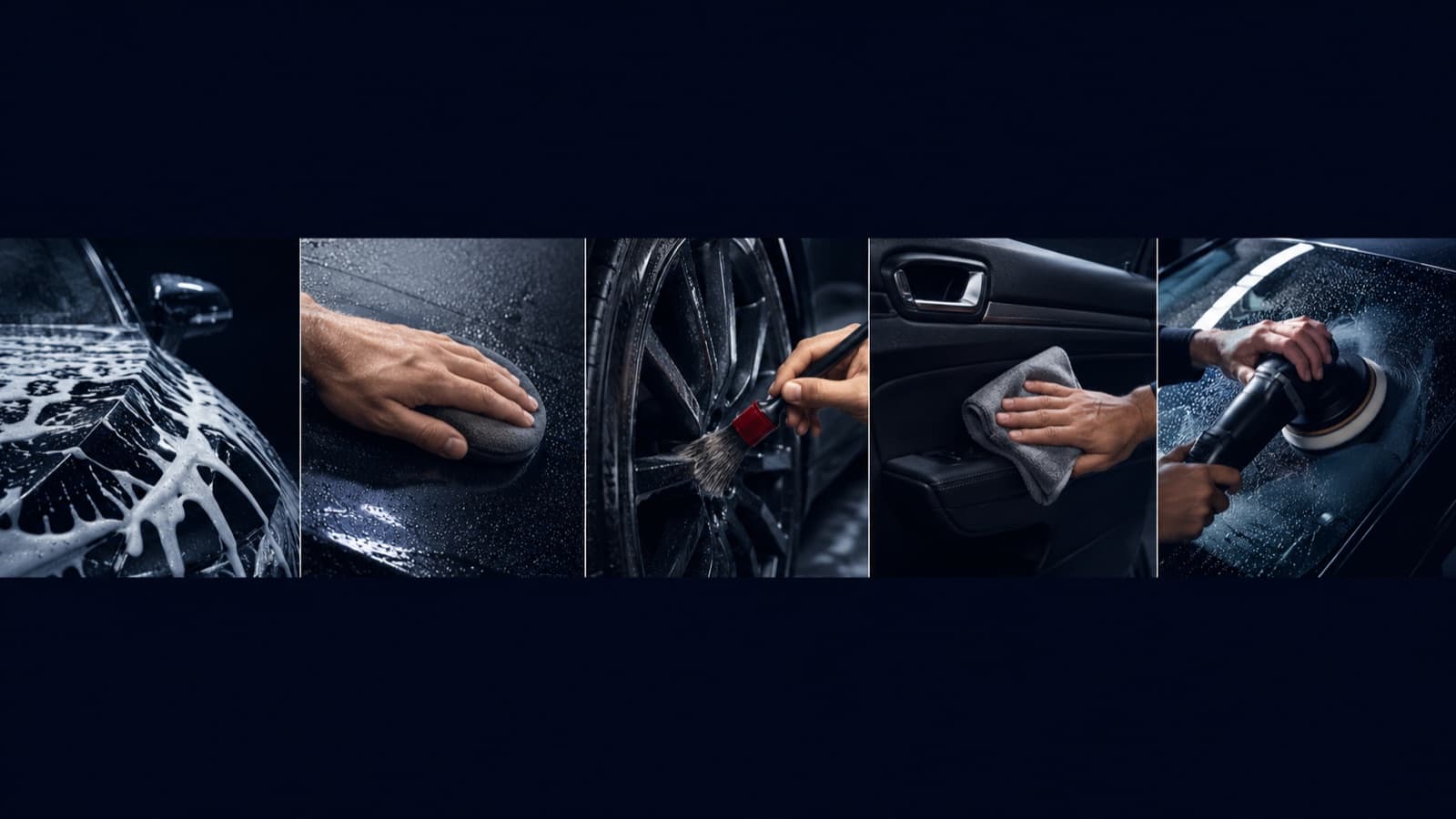
Doing the right things in the wrong order wastes most of the effort. Wax applied over bonded contamination seals the contamination in and you can feel it through the finish. Wheels cleaned last throw brake dust onto paint you have just protected. Glass done before the paint gets covered in overspray from everything after it.
This is the sequence, and the reason for each position. A full detail on a neglected car is a weekend the first time and a comfortable afternoon after that. You do not have to do all five in one go — but within a single session, this is the order.
Step by step
- 01
01 — Wash
Wheels first with dedicated kit, then rinse, pre-wash foam, two-bucket contact wash, sheeting rinse, dry. Everything that follows assumes a genuinely clean, dry surface. Working on a dirty panel at any later stage grinds dirt into the paint.
- 02
02 — Decontaminate
Run the back of your hand over the dry bonnet inside a plastic bag. If it feels like fine sandpaper, there is bonded contamination sitting proud of the clear coat. Iron remover dissolves the embedded metal particles chemically; clay shears off what is left mechanically. Both need the panel flooded and neither should ever be rushed.
Clay and iron removers can mar or dull paint if used on a dry or dirty surface. Test on a small, inconspicuous area first and keep the surface fully lubricated.
- 03
03 — Correct, gently and by hand
This is optional and it is where most damage happens. Hand polish will soften light swirling and restore gloss on a dull panel. It will not remove deep scratches, and it must never be fitted to a machine polisher — the heat a machine generates is not what this formulation is designed for, and burning through clear coat on an edge takes seconds.
Hand application only. Do not fit hand polish compound to any rotary or dual-action machine.
- 04
04 — Protect
Polished or clayed paint is bare and needs protection the same day. Carnauba wax for depth on dark colours, a synthetic sealant for durability, or a silica spray coating for the longest life. Apply thin, let it haze, buff with a clean plush towel. Whatever you use, it is a range of months, not permanent.
- 05
05 — Wheels, tyres, interior, glass
Wheels were cleaned first but get protected now, once the paint work is done. Tyre dressing goes on the sidewall only, never the tread. Interior is entirely manual — dilute the cleaner, brush the seams, wipe with colour-coded cloths so the door-sill cloth never touches a screen. Glass is genuinely last: inside horizontally, outside vertically, so any remaining streak tells you which side it is on.
Tyre dressing on the contact patch reduces grip. Keep it entirely off the tread.
The mistakes that cost the most
- Waxing a contaminated panel
- The wax bridges over bonded contamination instead of sitting flat on the clear coat. It looks acceptable for a week and then fails unevenly.
- Claying without decontaminating chemically first
- Clay has to shear off every embedded iron particle mechanically, which loads the bar and increases the risk of marring. Iron remover dissolves most of them for you.
- Doing wheels last
- Wheel cleaner overspray and brake dust land on freshly protected paint, and now you are washing the car twice.
- Glass before paint
- Wax residue, quick detailer mist and tyre dressing sling all end up on glass you already cleaned.
- Working in the sun
- Every chemical on this list needs to be removed before it dries. Heat and direct sunlight take that decision away from you.
Nothing in this sequence requires a powered tool, and every product referenced here is applied by hand. The order is the free part — it costs nothing to get right and it changes the result more than any single purchase.
Where the water goes
Wash water runoff is regulated in many US states and municipalities, and discharge into a storm drain may be prohibited where you live. Wash on grass or gravel, or use a containment mat, and check your local rules before you start.